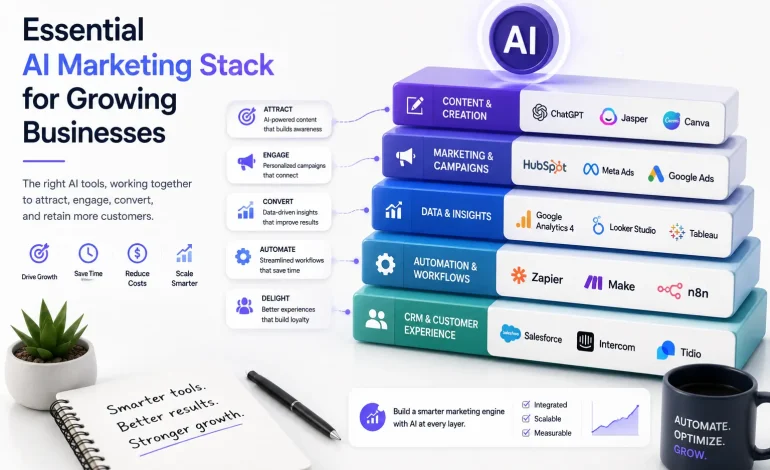
Essential AI Marketing Stack for Growing Businesses

The AI Marketing Stack Every Growing Business Should Have
Understanding the AI Marketing Stack
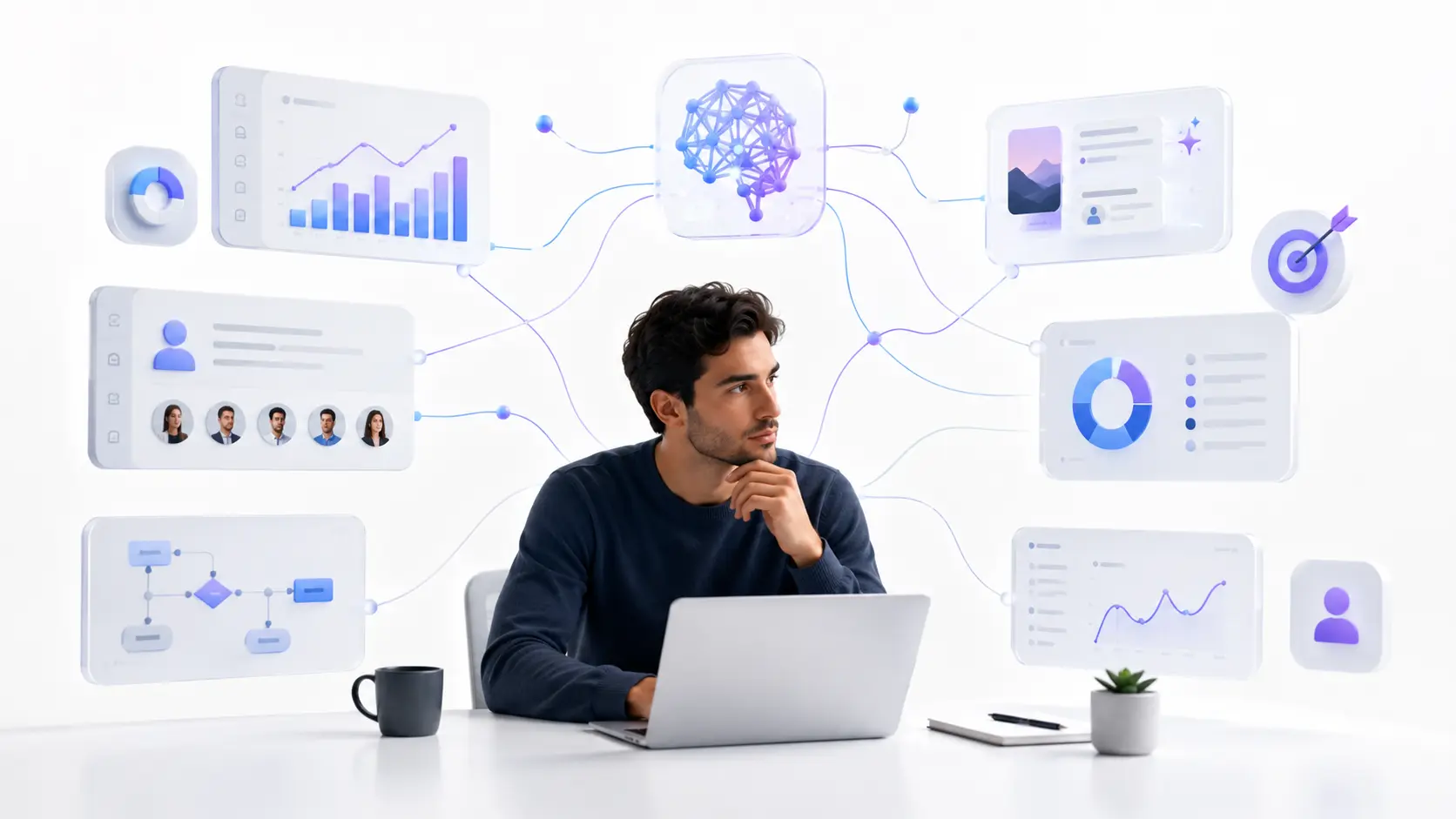
When we talk about an AI marketing stack, we refer to a suite of tools and technologies designed to optimize marketing efforts using artificial intelligence. This stack is not just a collection of software; it’s a strategic framework that streamlines operations, enhances decision-making, and improves customer engagement. The components typically include data analytics platforms, AI-driven content creation tools, and automation software, among others.
The primary distinction between an AI marketing stack and a traditional marketing stack lies in the integration of intelligence and automation. Traditional stacks often rely on manual intervention at various stages, from data collection to campaign execution. In contrast, an AI marketing stack automates these processes, allowing for real-time decision-making based on data insights. For instance, while a traditional stack might require a marketer to analyze customer data manually to identify trends, an AI-driven solution can automatically surface these insights, significantly reducing the time spent on analysis.
Separating the functions of creation, execution, and decision-making is crucial for effective marketing. In a fragmented system, marketers often find themselves lost in a sea of tools, each serving a different purpose but lacking cohesion. An AI marketing stack should clearly delineate these roles, allowing for a more streamlined approach to marketing. With a well-structured stack, businesses can better allocate resources and focus on strategic initiatives that drive growth.
Key Components of an Effective AI Marketing Stack for SMBs
For small and medium-sized businesses (SMBs), the right AI marketing stack can significantly improve efficiency and effectiveness. Here are the essential components:
1. Data Collection and Analysis Tools: At the foundation of any effective marketing stack is a robust data collection and analysis platform. Tools like Google Analytics and HubSpot provide valuable insights into customer behavior and campaign performance. However, integrating AI capabilities can elevate these tools. For example, platforms like Tableau or Looker offer AI-driven analytics that can predict customer behavior based on historical data, allowing SMBs to make proactive marketing decisions.
2. AI-Driven Content Creation and Optimization Tools: Creating engaging content is crucial, yet it can be resource-intensive. AI tools like Copy.ai and Jasper assist in generating content ideas, writing copy, and optimizing existing materials for SEO. These tools leverage natural language processing to understand what resonates with audiences, enabling marketers to produce relevant content faster.
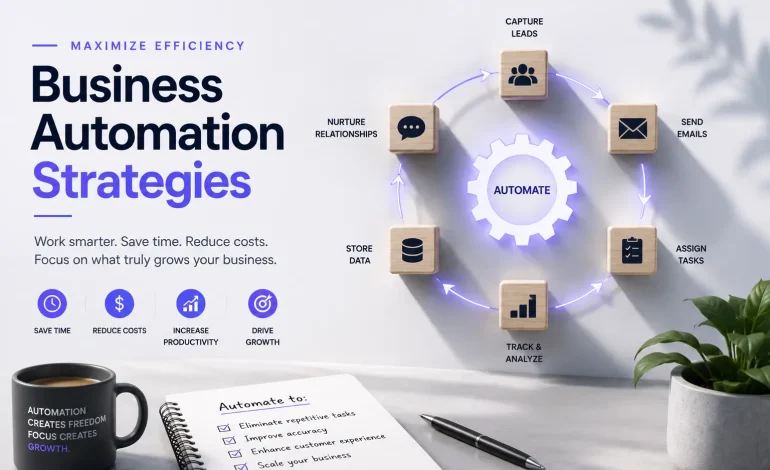
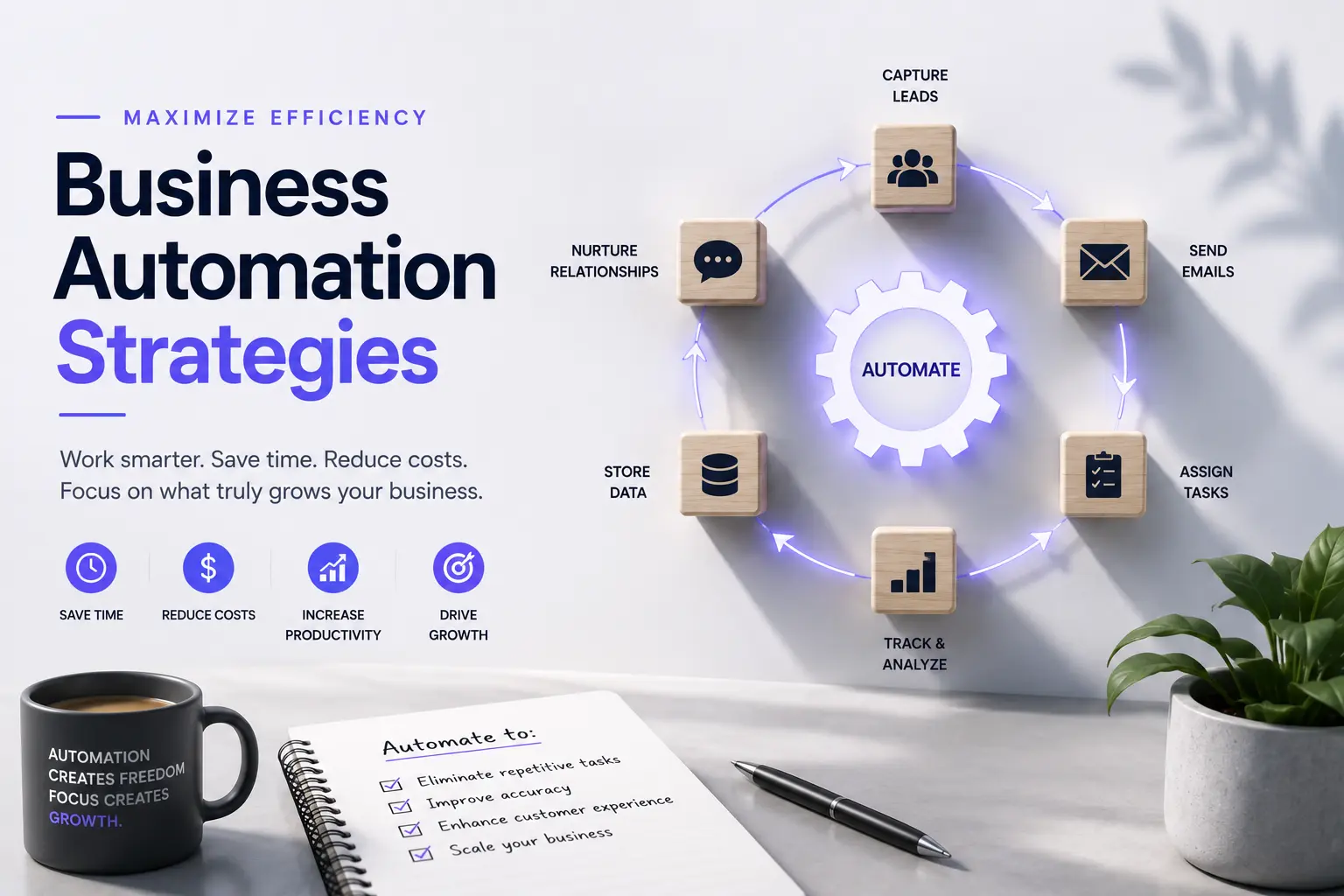
3. Automation Platforms for Campaign Execution and Management: Automation is a game-changer for SMBs looking to scale their marketing efforts without significantly increasing overhead. Platforms like ActiveCampaign and Zapier allow businesses to automate various marketing tasks, from email campaigns to social media posting. By setting up triggers and workflows, SMBs can ensure their marketing runs smoothly and efficiently, even with limited staff.
Incorporating these components into your AI marketing stack will streamline operations and enhance your overall marketing effectiveness.
Benefits of Implementing an AI Marketing Stack
The advantages of integrating an AI marketing stack into your business operations are tangible and impactful:
1. Increased Efficiency and Reduced Manual Workload: Automating repetitive tasks frees up valuable time for marketers to focus on strategy and creative development. For example, a company using an AI-driven email marketing platform can set up campaigns that automatically segment their audience based on behavior, ensuring that each customer receives tailored content without manual oversight.
2. Faster Reporting and Data-Driven Decision Making: AI marketing tools can compile and analyze data much faster than a human can. For instance, a study by McKinsey found that companies leveraging AI for marketing analytics can reduce reporting times by up to 50%. This speed not only allows for quicker adjustments to campaigns but also enables marketers to make decisions based on real-time data rather than outdated reports.
3. Enhanced Customer Targeting and Personalization: AI enables businesses to create highly personalized marketing campaigns that resonate with individual customers. By analyzing data from various sources, AI can help identify patterns and preferences, allowing marketers to deliver the right message to the right person at the right time. This level of personalization leads to higher engagement rates and, ultimately, increased revenue.
The clear business case for adopting an AI marketing stack is compelling, especially for SMBs that need to maximize every marketing dollar spent.
Choosing the Right Tools for Your Business
Selecting the right tools for your AI marketing stack is a critical step that can determine your success. Here are some criteria to consider:
1. Functionality vs. Cost: SMBs often operate with tight budgets, making it essential to balance functionality with affordability. Look for tools that offer scalable pricing models. For instance, platforms like Mailchimp provide tiered pricing based on the number of subscribers, allowing businesses to start small and scale as they grow.
2. Ease of Integration: Your marketing stack should work seamlessly together. When selecting tools, ensure they can easily integrate with each other. A fragmented stack can lead to data silos and inefficiencies. Tools like Zapier can connect various apps, making it easier to create a cohesive stack.
3. Case Studies of Successful Implementations: Look at other businesses similar to yours that have successfully implemented AI marketing stacks. For example, a retail company that integrated an AI-driven customer service chatbot reported a 30% increase in customer satisfaction and a 20% reduction in operational costs. These real-world examples can help guide your decision-making process.
Choosing the right tools requires careful consideration, but the payoff can be substantial in terms of efficiency and effectiveness.
Future Trends in AI Marketing for SMBs
As technology continues to evolve, so too will the landscape of AI marketing. Here are some emerging trends to keep an eye on:
1. Emerging Technologies and Their Potential Impact: Innovations such as augmented reality (AR) and virtual reality (VR) are beginning to influence marketing strategies. Brands that adopt these technologies can create immersive experiences that engage customers in new ways. For instance, furniture retailers can use AR to allow customers to visualize how a piece of furniture would look in their home, enhancing the buying experience.
2. Predictions for the Evolution of AI Marketing Stacks: As AI technology becomes more sophisticated, we can expect to see even more advanced predictive analytics and machine learning capabilities. This evolution will enable businesses to anticipate customer needs before they express them, creating a more proactive marketing approach.
3. Preparing Your Business for the Next Wave of Marketing Innovation: To stay ahead, SMBs must be agile and willing to adapt to new technologies. Regularly evaluating your marketing stack and being open to integrating new tools will be essential. Consider establishing a dedicated team or individual responsible for monitoring trends and innovations in AI marketing.
In conclusion, establishing an AI marketing stack is not just beneficial but essential for SMBs looking to thrive in a competitive landscape. By investing in the right tools and strategies, businesses can streamline their operations, enhance customer engagement, and drive growth more effectively.
To ensure you’re making the most of your marketing efforts, I encourage you to evaluate your current marketing stack. Consider how AI tools can be integrated to enhance your processes and outcomes. For actionable insights, sign up for my newsletter, where I share resources and strategies to help you better leverage AI in your marketing efforts.