Maximize Efficiency with Business Automation Strategies

Understanding the Cost of Inefficiency
In business, business automation is often a silent killer. Statistics reveal that small business owners dedicate a staggering 40% of their time to tasks that could be automated. This means that nearly half of their working hours are spent on activities that don’t require human creativity or critical thinking. This inefficiency drains time and leads to poor allocation of resources, stymying growth and limiting the potential for innovation.
Consider a small marketing agency. The owner spends hours each week on invoice processing, scheduling meetings, and managing social media posts. Instead of focusing on client strategy or business development, she is bogged down by repetitive tasks. This leads to burnout, decreases job satisfaction, and limits the agency’s capacity to take on new projects. The owner may find herself in a cycle of overwork, where the stress of juggling multiple tasks leads to decreased productivity, further exacerbating the inefficiency.
Hiring additional staff to alleviate this burden might seem logical, but it often results in increased payroll costs without addressing the underlying inefficiencies. For instance, if the agency hires a new admin to handle these tasks, the owner might still feel overwhelmed due to the lack of streamlined processes. The result? A cycle of hiring more employees in an attempt to solve problems that business automation could easily address.
Moreover, the financial implications are significant. According to research, inefficiencies can cost businesses thousands of dollars annually. For example, if the agency spends an additional $50,000 on hiring staff to manage tasks that could be automated, that money could instead be invested in marketing strategies or technology that could drive more revenue.
Key Business Processes to Automate
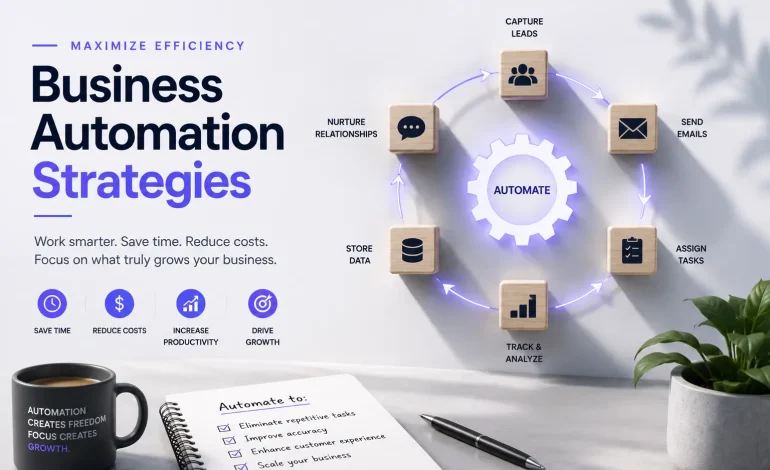
To combat inefficiency, businesses must first identify which processes are ripe for business automation. High-frequency, rule-based tasks are prime candidates. Here are some examples:
1. Invoice Processing: Automating the invoicing process can save countless hours. With tools like QuickBooks or Xero, invoices can be generated automatically based on project completion or service delivery. This not only speeds up payment cycles but also reduces human error. A small business that automates invoicing can expect to reduce processing time from several hours a week to just a few minutes, significantly improving cash flow.
2. Appointment Scheduling: Platforms like Calendly can automate meeting bookings, eliminating the back-and-forth emails that often lead to scheduling conflicts. This frees up employees to focus on more strategic tasks, such as client engagement or project planning. By reducing the time spent on scheduling from hours to mere minutes, employees can redirect their efforts toward revenue-generating activities.
3. Inventory Monitoring and Reporting: Automating inventory management through tools like TradeGecko or Zoho Inventory allows businesses to keep track of stock levels in real-time. This means employees no longer have to manually check inventory, significantly reducing errors and improving order fulfillment. For example, a retail store that automates inventory can avoid stockouts and overstock situations, ultimately leading to increased sales and customer satisfaction.
By automating these processes, businesses can free up employee time for higher-value work. Instead of spending time on administrative tasks, employees can engage in strategy development or customer relationship management, ultimately driving growth. When employees can focus on tasks that require creativity and critical thinking, the overall quality of work improves, leading to higher client satisfaction and retention.
Prioritizing Automation for Maximum ROI
Not all processes are created equal when it comes to business automation. To maximize return on investment (ROI), businesses should implement a scoring system based on three key criteria: frequency, cost, and replaceability.
– Frequency: How often is the task performed? The more frequent the task, the more beneficial it is to automate. For instance, if an employee spends multiple hours weekly on data entry, automating this task could yield substantial time savings. A business that automates a task performed daily could potentially save weeks of employee time each year.
– Cost: What is the cost associated with the task? If a task consumes a significant portion of payroll, it’s a strong candidate for automation. For example, if customer service representatives spend excessive time addressing common queries, implementing a chatbot could drastically reduce these costs. Additionally, the cost of automation tools has decreased significantly, making it more accessible for small businesses to invest in technology that can save them money in the long run.
– Replaceability: Is the task rule-based and repetitive? Tasks that fit this mold are prime targets for automation. While creative tasks such as content creation should remain human-driven, logistical tasks like scheduling can be effectively automated. This ensures that employees can focus on areas where human insight and creativity are essential, enhancing the quality of the output.
Start small with one workflow. Measure the outcomes, analyze the data, and gradually expand your automation efforts based on what you learn. For example, a small business might begin by automating its invoicing process, measuring the time saved, and then using that data to justify further automation investments. This iterative approach minimizes risk and builds confidence in the automation process.
Common Pitfalls in Business Process Automation
While business automation has clear benefits, it’s not without its challenges. One of the biggest risks is automating poorly designed processes. If a process is flawed, automating it will only magnify the issues. For instance, if your invoicing system has inaccuracies, automating it will perpetuate those inaccuracies, leading to cash flow problems and potential client dissatisfaction.
It’s essential to audit existing workflows before introducing automation. This means identifying bottlenecks, clarifying roles, and ensuring that the processes are streamlined and efficient. Fix the logic before you hit the automation button. A business that neglects this step may find itself facing greater inefficiencies than before automation was implemented.
Additionally, there’s a balance to strike between automation and human judgment. Certain tasks require a level of human insight that automation cannot replicate. While chatbots can handle basic customer inquiries, complex issues will still necessitate human intervention. Striking the right balance ensures that automation enhances rather than replaces human roles. Training staff to work alongside automated systems can also help utilize the technology to its fullest potential, fostering a culture of innovation within the organization.
Conclusion: Building a Scalable Business Model
In conclusion, automating processes is essential for creating a scalable business model before considering new hires. By focusing on business automation, businesses can streamline operations, reduce costs, and ultimately drive growth. It’s crucial for businesses to assess their current workflows and identify opportunities for automation.
Every business has its unique set of processes, but the key is to start with the most repetitive and time-consuming tasks. Evaluate your operations, implement automation tools, and measure the impact. The results will speak for themselves.
If you’re looking to dive deeper into how automation can benefit your business, subscribe to my newsletter. You’ll receive actionable insights and resources tailored to help you optimize your workflows and drive efficiency before making costly hiring decisions.