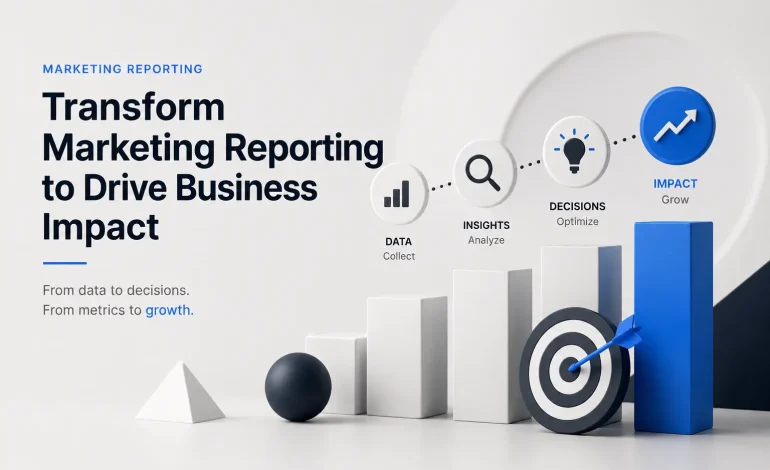
Transform Marketing Reporting to Drive Business Impact

Stop Reporting Metrics. Start Reporting Business Impact.
In the realm of marketing reporting, the disconnect between collected data and actionable insights has reached a critical point. As executives, you are bombarded with numbers, charts, and various performance metrics that often lead to confusion rather than clarity. It’s time to pivot away from traditional marketing metrics that do little to drive strategic decisions and instead focus on business impact metrics that align with your organization’s objectives.
The Pitfalls of Traditional Marketing Metrics
Overabundance of Metrics Leads to Confusion and Inaction
Let’s face it: the sheer volume of marketing metrics can be overwhelming. From impressions to engagement rates, the metrics landscape is cluttered. This saturation creates a paradox where more data leads to less clarity. According to a report by WSI, an overabundance of metrics can lead to decision paralysis, where executives struggle to discern which numbers truly matter (WSI, 2023).
Many Metrics Do Not Correlate with Actual Business Outcomes
Most traditional metrics do not correlate directly with business outcomes. For instance, vanity metrics such as social media likes or website traffic are often touted as indicators of success, but they fail to reflect real financial performance. A common practice is reporting click-through rates (CTR) in email marketing without linking them to actual conversions or revenue generation. This disconnect often leads to misguided strategies that fail to drive growth.
Need for a Paradigm Shift Towards Meaningful KPIs
The solution lies in a paradigm shift towards meaningful Key Performance Indicators (KPIs) that align with business objectives. Instead of drowning in a sea of metrics, focus on those that provide insight into how marketing efforts contribute to overall business success. This requires a focused approach that prioritizes metrics based on their relevance and impact.
Identifying Business Impact Metrics
Focus on Metrics That Directly Influence Revenue and Growth
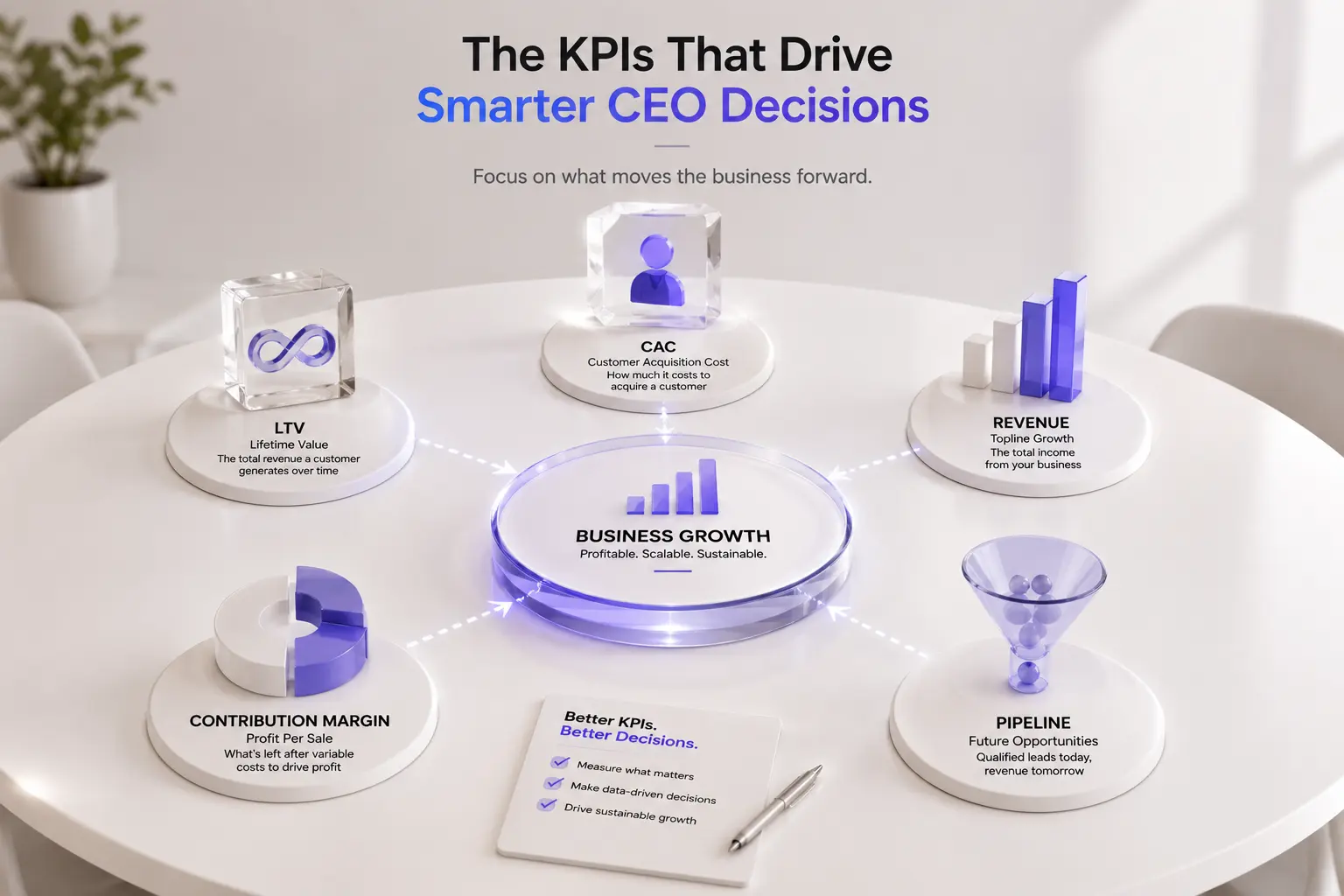
When identifying business impact metrics, focus on those that directly correlate with revenue and growth. Metrics such as Customer Acquisition Cost (CAC), Customer Lifetime Value (CLV), and conversion rates are pivotal. These metrics not only provide insight into marketing effectiveness but also guide strategic decision-making.
Examples of Impactful KPIs: Customer Acquisition Cost, Lifetime Value, and Conversion Rates
1. Customer Acquisition Cost (CAC): This metric indicates how much you are spending to acquire a new customer. It’s essential for understanding the efficiency of your marketing strategies. If CAC is too high compared to the revenue generated from that customer, it signals a need to optimize marketing spend.
2. Customer Lifetime Value (CLV): CLV measures the total revenue you can expect from a single customer account throughout the business relationship. By understanding CLV, organizations can make informed decisions about how much to invest in customer acquisition and retention strategies.
3. Conversion Rates: Tracking conversion rates across various stages of the sales funnel helps identify bottlenecks and optimize marketing efforts. For example, if a high number of leads drop off at the demo stage, this signals potential issues with the sales process or product presentation.
Align Metrics with Business Goals for Better Decision-Making
Aligning metrics with overarching business objectives ensures that marketing activities contribute meaningfully to the bottom line. For instance, if a company’s goal is to increase market share, tracking metrics like market penetration and customer retention rates becomes critical. Executives should ask: “How does this metric support our strategic objectives?” By framing metrics in the context of business goals, decision-making becomes more coherent and focused.
Building Executive Dashboards that Matter
Create Dashboards that Highlight Key Business KPIs Rather Than Vanity Metrics
The value of an executive dashboard lies in its ability to distill complex data into digestible insights. Too often, dashboards are cluttered with vanity metrics that do not drive strategic decision-making. Instead, focus on creating dashboards that highlight key business KPIs. For example, an effective dashboard might include metrics like CAC, CLV, and conversion rates, along with visual indicators of performance trends over time.
Use Visualization Tools to Present Data Clearly and Effectively
Effective data visualization is crucial for understanding complex information quickly. Tools like Tableau, Power BI, and Google Data Studio can help present data in a way that highlights trends and insights rather than just numbers. For instance, using heat maps to represent customer engagement can quickly show which parts of a campaign are working and which are not.
Involve Stakeholders in the Design Process to Ensure Relevance
A dashboard is only as good as its relevance to the users. Involve stakeholders from various departments—like sales, finance, and marketing—in the dashboard design process. Their input will help ensure that the metrics displayed align with their needs and that the dashboard becomes a practical tool for decision-making. This collaborative approach fosters buy-in and ensures that the dashboard remains a living document that evolves with the business.
Transforming Data into Strategic Insights
Leverage AI and Automation to Analyze Data and Generate Insights
AI and automation have the potential to transform how organizations analyze data and derive insights. By leveraging AI tools, businesses can automate the collection and analysis of data, allowing for real-time insights that inform decision-making. According to a study published by NinjaCat, organizations using AI-driven analytics are better positioned to understand their performance and make data-driven decisions (NinjaCat, 2023).
Move from Reporting to Advising: Provide Actionable Recommendations
The role of marketing reporting should evolve from merely reporting numbers to advising on actions. This shift requires a deeper analysis of data to provide actionable recommendations that drive strategic initiatives. For example, rather than simply reporting a decline in conversion rates, an effective consultant might analyze customer behavior to identify the underlying causes and recommend specific changes to the marketing strategy.
Continuous Feedback Loop to Refine Metrics and Reporting Processes
Establishing a continuous feedback loop for refining metrics and reporting processes is essential. Market conditions change, customer preferences evolve, and business goals shift. Regularly revisiting and revising the metrics you track ensures that they remain relevant and actionable. This iterative process allows organizations to adapt quickly and maintain alignment with strategic objectives.
Case Studies: Success Stories of Impact-Driven Reporting
Showcase Companies That Successfully Shifted Focus to Business Impact Metrics
Examining real-world examples can provide valuable insights into the transition from traditional marketing metrics to business impact metrics. For instance, a leading software company shifted its focus from tracking website traffic to monitoring CLV and CAC. As a result, they improved their marketing ROI by 25% within a year, demonstrating that aligning metrics with business outcomes can yield significant results.
Discuss the Outcomes and Improvements in Decision-Making
Another case study involves a retail brand that revamped its executive dashboard to focus on business impact metrics. By prioritizing metrics like customer retention rates and average order value, the company was able to identify underperforming segments and optimize their marketing strategies accordingly. This shift led to a 15% increase in sales over six months, showcasing the direct link between impactful reporting and improved business performance.
Highlight the Role of Leadership in Fostering a Metrics-Driven Culture
Leadership plays a pivotal role in fostering a metrics-driven culture. When executives prioritize business impact metrics and actively engage in the reporting process, it sets a precedent for the entire organization. Leaders should champion the use of actionable metrics and encourage teams to think critically about how their activities contribute to business outcomes. This alignment fosters accountability and drives performance across the organization.
Conclusion
In conclusion, the move from traditional marketing reporting to business impact metrics is not just an operational tweak; it’s a fundamental shift in how organizations approach data and decision-making. By focusing on metrics that matter—those that align with business objectives—you can transform your reporting process from a burdensome task into a strategic advantage.
If you’re ready to rethink your reporting strategies and focus on metrics that drive business impact, consider signing up for my newsletter. You’ll receive exclusive insights, case studies, and actionable recommendations tailored to executives looking to make data-driven decisions that truly matter.