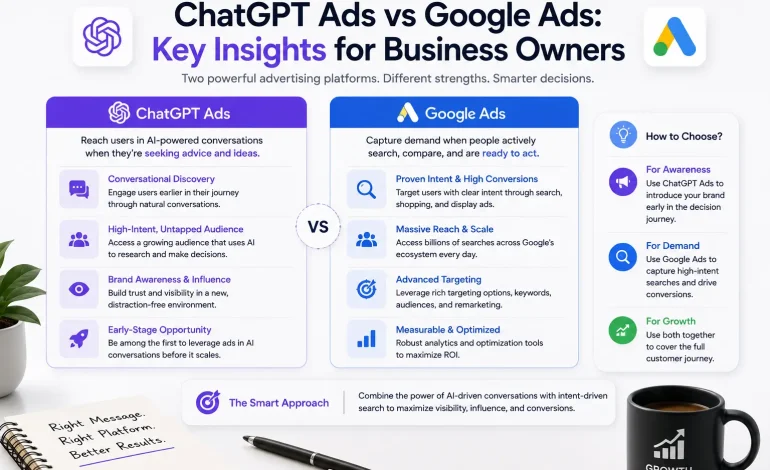
ChatGPT Ads vs Google Ads: Key Insights for Business Owners

ChatGPT Ads vs Google Ads: What Business Owners Should Understand
As a business owner, deciding where to allocate your advertising budget can feel overwhelming. With the emergence of AI-driven platforms like ChatGPT Ads, many are left wondering whether to stick with the established giant, Google Ads, or take a leap into the innovative world of AI advertising. To make an informed decision, it’s crucial to understand the fundamental differences in user intent between these two advertising platforms. This article will break down the key aspects of both, helping you identify which might be the best fit for your marketing goals.
Understanding User Intent: The Core Difference
User intent is the driving force behind any advertising strategy. It determines how potential customers interact with your brand and ultimately influences their buying decisions. Understanding user intent not only helps in crafting relevant ads but also ensures that your marketing efforts resonate with the audience.
Google Ads: Capturing Declared Intent
Google Ads excels in capturing declared intent through specific search queries. When users type in a query, they express a clear intent, whether it’s to find a local service, purchase a product, or seek information. This makes Google Ads particularly effective for high-intent, transactional searches. For example, if someone searches for “buy running shoes online,” the intent is clear: they are ready to make a purchase. This specificity allows businesses to target their ads directly to users who are further down the sales funnel, leading to higher conversion rates. Moreover, Google Ads utilizes a robust keyword targeting system, allowing businesses to select keywords that align closely with their products or services, ensuring that the ads reach potential customers right when they are actively searching.
ChatGPT Ads: Leveraging Conversational Context
In contrast, ChatGPT Ads leverage conversational context to gain a deeper understanding of user needs and preferences. Rather than responding to specific keywords, ChatGPT Ads engage users in a dialogue, allowing for exploration during the research phase. For instance, a user might initiate a conversation with a query like, “I’m looking for the best running shoes for flat feet.” The AI can then guide the user through a tailored conversation, considering their unique needs and preferences, which is ideal for complex or high-consideration products. This capability positions ChatGPT Ads as a powerful tool for brand discovery and engagement, allowing businesses to build relationships with potential customers before they even reach the stage of making a purchase.
When to Choose Google Ads
Google Ads remains a reliable choice for many businesses, particularly those targeting users with immediate purchase intent. Here are a few scenarios where Google Ads shines:
Immediate Purchase Intent
If your business offers local services, e-commerce products, or time-sensitive offers, Google Ads is often the safer bet. For example, a plumbing service that appears in search results for “emergency plumber near me” can capture customers who are ready to make a call immediately. The immediacy of intent allows for straightforward conversion tracking and quick ROI assessment. Additionally, businesses can benefit from Google’s ad extensions, which allow for additional information such as phone numbers, locations, and links to specific pages, making it easier for users to contact or learn more about the service.
Mature Conversion Tracking and ROI Benchmarks
Google Ads has established conversion tracking systems and industry benchmarks that can guide your advertising strategy effectively. Businesses can analyze performance data over time, refine their keywords, and optimize ad copy based on proven results. This maturity in the platform makes Google Ads a solid choice for direct response campaigns, providing a clear path to measurement and accountability. Furthermore, Google Ads provides tools like A/B testing, which allows businesses to experiment with different ad formats and messages to determine what resonates best with their audience, thereby enhancing the overall effectiveness of their campaigns.
When to Opt for ChatGPT Ads
While Google Ads has its strengths, there are compelling reasons to consider ChatGPT Ads, especially if your marketing goals focus on user engagement and education. Here’s when ChatGPT Ads can be particularly beneficial:
Engaging Users During the Research Phase
If your products or services are complex or require considerable thought before purchase, ChatGPT Ads can facilitate meaningful conversations that help guide users through their decision-making process. For example, a tech company selling software solutions might benefit from engaging potential customers in a dialogue about their specific needs, challenges, and preferences, thus fostering a relationship before a purchase is made. This conversational approach not only builds trust but also allows businesses to tailor their messaging based on the specific pain points and interests of potential customers, increasing the likelihood of conversion in the long run.
Lower Cost-Per-Click Potential
Another advantage of ChatGPT Ads is the potential for a lower cost-per-click (CPC) compared to traditional Google Ads, especially in less competitive environments. Businesses can experiment with conversational ads without the higher stakes typically associated with established keywords. This makes ChatGPT Ads a viable option for brands looking to expand their reach and engage users without the budget constraints that often accompany traditional search advertising. Moreover, by utilizing AI-driven conversations, businesses can potentially reduce the cost of acquiring leads while simultaneously enhancing the quality of those leads through personalized interactions.
Navigating the Budget Allocation: A Dual Approach
As a business owner, the key to maximizing your advertising spend may lie in a dual approach that incorporates both Google Ads and ChatGPT Ads. Here are some strategies to consider:
Covering the Full Buyer Journey
Running both platforms simultaneously allows you to cover the full buyer journey. Google Ads can capture users ready to convert, while ChatGPT Ads can nurture those who are still in the exploratory phase. By diversifying your approach, you can ensure that you’re engaging users at every stage of their journey, from awareness to conversion. This holistic strategy ensures that you are not only driving immediate sales but also building a loyal customer base that appreciates the informed and personalized experience.
Establish Clear KPIs
It’s essential to establish clear KPIs for each platform. For Google Ads, focus on metrics like click-through rates (CTR), conversion rates, and cost per acquisition (CPA). For ChatGPT Ads, you might prioritize engagement metrics, such as interaction length and user satisfaction scores. Recognizing that ChatGPT Ads may not deliver immediate conversions is crucial; however, they can significantly enhance brand awareness and user engagement over time. By monitoring these KPIs, businesses can gain insights into the effectiveness of their campaigns and make informed decisions about future strategies.
Practical Steps for Implementation
Implementing both Google Ads and ChatGPT Ads requires a thoughtful approach. Here are some practical steps to get started:
Start with Google Ads
If you’re new to paid advertising, begin with Google Ads to build foundational knowledge. Familiarize yourself with the platform’s tools, ad formats, and optimization strategies. Understanding how to effectively target keywords and measure performance in Google Ads will provide a solid basis for your advertising efforts. Additionally, consider utilizing Google’s resources, such as tutorials and support forums, to enhance your learning curve and ensure you are maximizing the potential of your campaigns.
Allocate a Test Budget for ChatGPT Ads
Once you feel comfortable with Google Ads, allocate a test budget for ChatGPT Ads to gauge their effectiveness. Start small, focusing on specific campaigns or product lines. Monitor performance closely to see how users engage with your ads and what insights you can glean from the conversations. This measured approach allows you to experiment without overcommitting resources, making it easier to pivot if necessary. Furthermore, gather feedback from users interacting with your ChatGPT Ads to continuously improve the conversational experience.
Assess and Adapt
Regularly assess the performance of both platforms. Use data to inform your decisions, adjusting your strategies based on what’s working and what’s not. For instance, if you find that ChatGPT Ads are driving significant engagement but not immediate conversions, consider how you can funnel those engaged users back into a more direct response strategy with Google Ads. This adaptive approach enables businesses to remain agile in their advertising efforts, responding to market changes and user behavior effectively.
Conclusion
In the battle of ChatGPT Ads vs Google Ads, there’s no one-size-fits-all answer. The right choice depends on your business goals, target audience, and the stage of the buyer journey you’re focused on. By understanding the core differences in user intent, knowing when to leverage each platform, and employing a dual approach to budget allocation, you can create a more effective advertising strategy that meets your unique business needs.
If you’re still unsure about how to best allocate your advertising budget, consider subscribing to our newsletter for insights and tips on maximizing your marketing efforts. By staying informed, you can make data-driven decisions that enhance your advertising strategy and drive business growth.